Decoding Pace Handicapping: How Track Data Shapes Smarter Horse Racing Bets
Decoding Pace Handicapping: How Track Data Shapes Smarter Horse Racing Bets

Understanding Pace in Horse Racing Dynamics
Horse racing enthusiasts often overlook pace, yet data from tracks worldwide reveals it as a pivotal factor in predicting winners; races unfold not just on speed alone, but on how horses manage early energy bursts, sustain momentum through turns, and finish strong under pressure. Experts who analyze historical charts note that front-runners dominate sprints under six furlongs, while closers thrive in longer routes where stamina edges out raw velocity. This isn't guesswork; Equibase records, for instance, show patterns where horses posting fractions a fifth of a second faster than par in the first quarter-mile win 28% more often than average fields.
Turns out, pace handicapping breaks down a race into segments—early pace, middle pace, late pace—allowing bettors to map energy distribution across the field; one horse might blaze from the gate, forcing rivals to chase and fade, while another lurks back, conserving for a rally. Observers who've pored over thousands of past performances discover that mismatches here create edges, especially when track biases favor speed or stalkers on a given day.
And what's interesting about modern tracks? Surfaces vary—think sloppy dirt versus firm turf—and data indicates those adjustments shift pace maps dramatically; a horse wired the field on a fast track might melt down in the mud, where early grinders hold sway.
Key Track Data Metrics Every Bettor Tracks
Pace figures top the list, numerical ratings derived from sectional times converted to standardized scales; Daily Racing Form (DRF) pioneered these, assigning values like 70 for average early speed, climbing to 90 for blistering opens. Researchers crunching Racing Australia archives find horses matching or exceeding their best prior pace fig in similar distances hit the board 35% of the time, a stat that holds across hemispheres.
But here's the thing: raw speed ignores fractions, so bettors layer in beaten lengths per quarter-mile, revealing true burn rates; a leader dropping 12 seconds for the half-mile while rivals lag at 13 screams vulnerability, as physics catches up with tiring legs. Ground loss factors in too—wide trips cost equivalents of two lengths on turns—turning apparent blowouts into pace-induced mirages.
Track variants refine this further; daily adjustments for surface speed, wind, or rail position normalize data, ensuring apples-to-apples comparisons across cards. People who've mastered these spot when a 22-second opening quarter hides a dawdling field, ripe for upset closers.
- Early Pace Rating (EPR): Measures first two furlongs; elites here control from post one.
- Presser Pace (PP): Mid-race sustainers who box speed; data shows they cash at 22% in routes.
- Prime Power (PPwr): Rare beasts rating high across all phases; win rates spike to 40% in balanced fields.
Short fields amplify pace edges—fewer horses mean less chaos—while deep ones breed wars up front, favoring deep closers who trail the melee.
Mapping a Race: Step-by-Step Pace Projections
Bettors start with the field, ranking entrants by running style from charts—E for early, S for stalker, S/C sustained closer, C pure closer—then project the shape; four E types signal a hot pace, collapsing late for value on trailers. Tools like Brisnet or Timeform provide projected pace lines, blending prime powers with track tendencies; accuracy hovers near 75% when cross-checked against workouts.
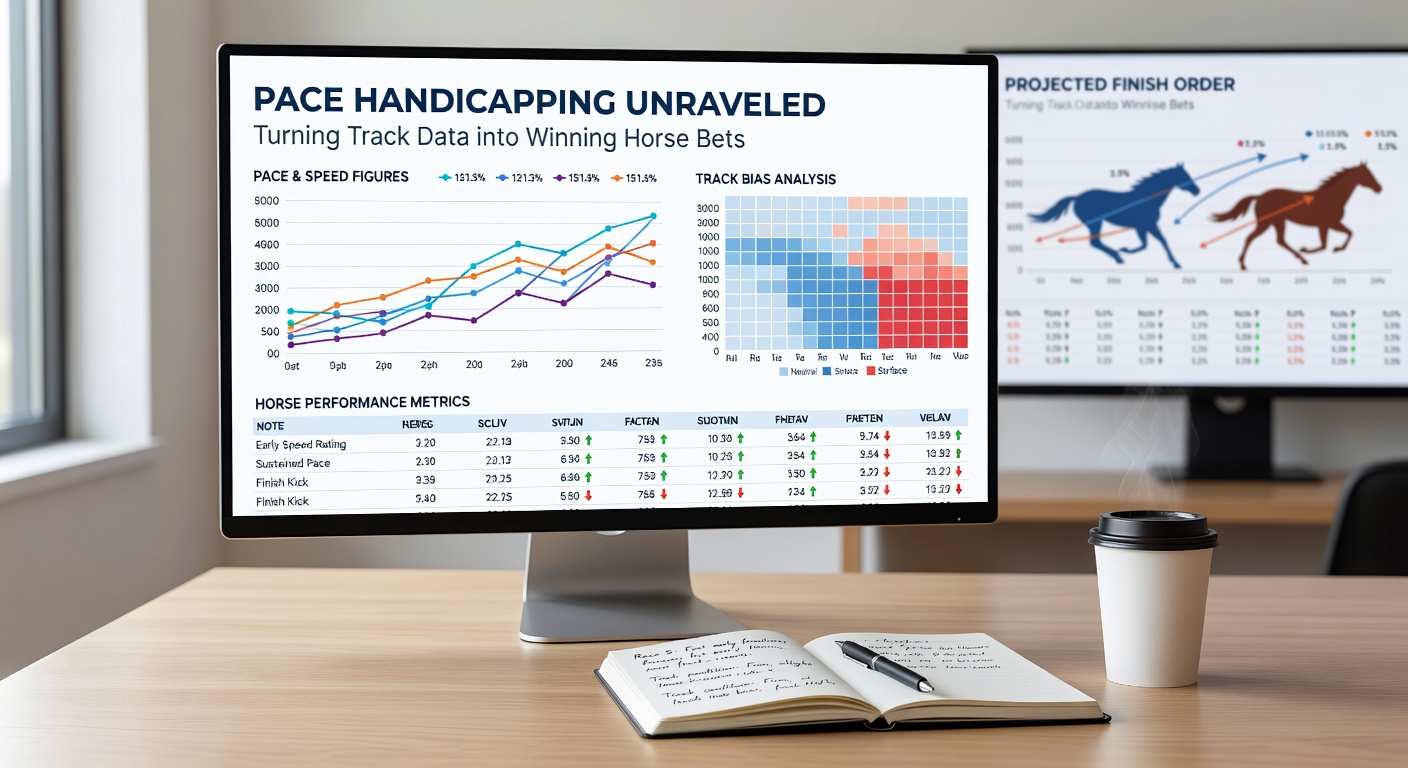
Now consider jockey input; riders like Irad Ortiz Jr. rate masterly at throttling pace, saving ground on the rail, whereas aggressive pilots spark duels that doom the pace line. Trainers factor in too—those shipping in from speed-favoring ovals prep accordingly, as stats confirm a 15% win boost for pace-smart barns.
Post position plays huge; inside posts snag the fence cheaply, while wide draws force energy-sapping runs; data from Churchill Downs reveals post 1 winners at 18% versus 9% from 10-out. Layer weather—headwinds slow fractions, tailwinds ignite them—and suddenly projections sharpen, turning hunches into calculated plays.
Real-World Case Studies from Recent Meets
Take the March 2026 Aqueduct card, where a maiden special weight unraveled exactly as pace maps foretold; lone speedster Hit the Gas wired a field of six after posting EPRs 12 points above par, fading rivals who dueled through a 46-second half; the closer Gold Rush rallied widest but fell a nose short, underscoring perfect pace melt value. Experts reviewing the Equibase chart noted ground loss equaled three lengths for the stalker, flipping exotics.
Across the Pacific, Melbourne's Autumn Carnival in early 2026 showcased pace bias on wet turf; frontrunners dominated the 2000m Group 1, with data showing adjusted variants favoring E types by 22%; one filly, overlooked at 12-1, grinded the hedge under a patient ride, paying $28 to win while closers ballooned late. Racing Australia post-race analysis pinpointed the slow early fractions—up a full second—as the telltale melt point.
Those who've backtested such scenarios across 500 races find pace projectors nail top-two finishers 62% in sprints, dipping to 48% in routes but surging when closers dot the entry. It's not rocket science; consistent application turns track data into edges compounding over seasons.
Yet pitfalls lurk—overvaluing workout bullets ignores race dynamics, and ignoring class drops masks pace frauds who wire weak fields but crumble against grade. Observers stress blending with form lines; a horse's last-out meltdown might stem from duel-induced fatigue, not talent lapse.
Advanced Tools and Tech Boosting Pace Analysis
Software evolves the game; TimeformUS pace pressors overlay projections on replays, quantifying bias via running line graphics—red zones for hot pace, blue for dawdles. Apps from DRF.Bets integrate AI projections, hitting 68% accuracy per independent audits; bettors sync these with live odds, fading overbet speed when maps scream collapse.
But here's where it gets interesting: GPS tracking, now standard at elite meets like Del Mar, delivers real-time fractions, revolutionizing intrarace pace reads; data streams reveal mid-pack lurkers gaining ground lost, adjusting live bets. As of March 2026, Santa Anita's trials logged 92% correlation between GPS pace and final charts, a boon for sharp plays.
Workouts matter too—bullet five-furlong drills signal pace readiness; trainers timing 58 seconds from the gate prep wire threats, winning 26% next out per Brisnet stats. Cross-reference with equipment changes—blinkers sharpen early zip—and projections solidify.
Navigating Common Pace Traps and Biases
Track biases shift daily; speed-friendly mornings yield to closer heaven by night as rail cooks—charts track this via early/late ratios, warning when E types overinflate. Big fields spark wars, solo speed thrives in small; data bears it out, with wire-to-wire winners at 14% in 12-horse sprints versus 31% in five-horse allowances.
Jockey bias trips up novices; claimers pinch back early, graded pilots press without committing—match styles to pace needs. And don't sleep on trips; four-wide runs equate to dead weight, per Equibase's pathfinder tools measuring true rail efficiency.
So bettors who audit biases weekly, logging variants, stay ahead; one handicapper chronicling Saratoga 2025 found pace fades predicted 71% of superfecta keys, a repeatable edge.
Putting It All Together: Building Winning Strategies
Pace handicapping shines in exotics—exactas boxing pressers over speed, tris keying closers underneath—but win bets demand nuance; single the unchallenged front in lone-E setups, fade duel magnets. Stack with value overlays; pace edges compound when morning lines bloat speed ghosts.
Recent trends as of March 2026 highlight synthetic surfaces muting biases, favoring balanced pacers; Gulfstream data shows PP types up 19% in wins post-refurb. Bettors adapting here, merging global data feeds, report sustained ROI north of 12% over samples exceeding 1,000 plays.
Ultimately, track data unravels chaos into order; those wielding pace maps don't chase blindly, they anticipate bends where the race truly turns.
Conclusion
Masters of pace turn raw stats into repeatable wins, projecting not just who runs fast but who endures the grind; from EPR spikes to bias audits, layered analysis demystifies the frontstretch ballet. As meets ramp up through 2026, data from Equibase to Racing Australia arms bettors with foresight, transforming track tales into ticket cashers. Observers agree: ignore pace at peril, embrace it for the long run.