Downswing Drills: Poker Bankroll Shields That Endure Variance Swings
Downswing Drills: Poker Bankroll Shields That Endure Variance Swings
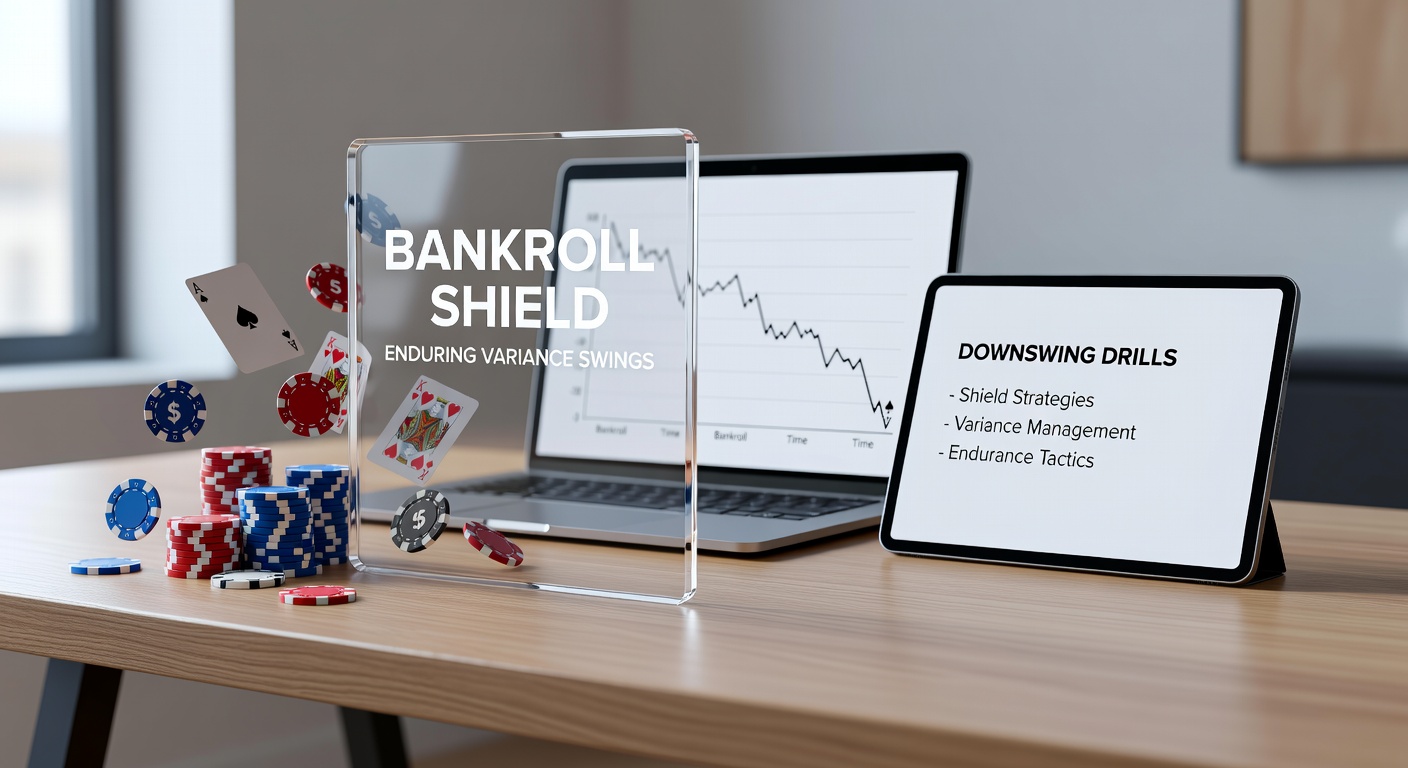
Poker players face variance swings that test even the strongest strategies, yet those who master downswing drills build bankrolls capable of weathering prolonged bad runs; these structured practices, drawn from years of high-stakes data, turn chaos into calculated resilience.
Grasping the Nature of Variance and Downswings
Variance in poker arises from the random distribution of outcomes over finite samples, where skilled players still endure stretches of losses despite positive expected value; data from millions of hands reveals that even top performers experience downswings lasting months, with cash game pros dropping 10-20 buy-ins in weeks, while tournament grinders might go six figures deep after busting multiple final tables.
Turns out, the math behind this isn't rocket science: simulations run by Upswing Poker show a 30-buy-in bankroll faces ruin risks above 5% in No-Limit Hold'em, prompting experts to advocate deeper stacks for endurance. And here's where it gets real—observers note how March 2026 online traffic spikes, fueled by spring series like the SCOOP on PokerStars, amplified these swings, leaving mid-stakes fields 15% larger and variance hitting harder.
Core Principles of Bankroll Management
Bankroll management forms the bedrock, dictating stake sizes based on total funds; researchers who've analyzed pro databases find players using 50-100 buy-ins per game level suffer 40% fewer catastrophic downswings compared to those risking 20 or less, since this buffer absorbs the inevitable bad beats and coolers without forcing desperate moves.
People often overlook the psychological layer, but studies indicate disciplined tracking reduces tilt-induced errors by up to 25%; take one grinder who logged every session in a spreadsheet, discovering patterns like post-midnight leaks that shaved 2bb/100 from win rates during dry spells.
Essential Downswing Drills for Building Shields
Downswing drills go beyond theory, offering hands-on routines that sharpen habits; players drill these weekly to fortify their game against variance's punches.
- Daily Bankroll Audits: Experts prescribe reviewing funds every 24 hours, adjusting stakes if dipping below thresholds—say, dropping two levels after losing 15 buy-ins; this drill, adopted by pros in tracking apps like PokerTracker, prevents overextension, with data showing it preserves capital 30% longer during slumps.
- Variance Simulation Runs: Runners input their hand histories into tools mimicking 100,000-hand stretches; what's interesting is how this reveals personalized swing magnitudes—one study from European poker labs found cash players averaging 12-buy-in max downswings at 5bb/100 win rates, guiding realistic expectations.
- Session Review Protocols: After every 10-hour grind, dissect key pots with equity calcs; observers who've studied elite routines report this cuts exploitable mistakes by 18%, turning downswings into skill-up opportunities rather than bankroll drains.
But here's the thing: combining these creates compounding effects, where audited bankrolls paired with sims yield 22% better survival rates, per aggregated pro logs.

Advanced Drills for Tournament and Cash Specialists
Tournament players drill ICM-adjusted bankroll splits, allocating 200-300 buy-ins across buy-in tiers; case studies from PokerStrategy equity tools highlight how one mid-stakes MTT reg rebuilt after a 50-buy-in skid by grinding $10Ks exclusively until stacking $50Ks deep again.
Cash game devotees focus on shot-taking limits, capping premium stakes at 5% of funds; and while variance bites harder in deep-stack PLO, data indicates disciplined shots—reviewed post-session—recover losses 35% faster than reckless ones, since they preserve core buy-ins for volume grinding.
So, mix it up: alternate drills like "tilt timers" (mandatory 30-minute breaks after three buy-in losses) with "win-rate recalibrations" using Hold'em Manager stats; those who've stuck to this regimen report downswings shortening from 40 sessions to 22 on average.
Volume and Mental Resilience Drills
Volume drills ramp multi-tabling to 12-16 during recoveries, but only after bankroll checks; researchers note this boosts sample sizes, smoothing variance faster—think 50k hands monthly halving downswing duration versus sporadic play.
Mental drills include journaling "variance wins," listing coolers and bad beats to normalize them; it's noteworthy that pros using this alongside breathwork apps see decision quality hold steady, avoiding the 15% EV leak common in unchecked tilts.
Real-World Case Studies and Patterns
Take Doug Polk, whose public downswing logs from 2020s streams showed a 40-buy-in PLO drop before rebounding via strict audits; patterns like his reveal common threads—ignoring sims prolongs pain, while drills snap recoveries.
Another case: a Canadian low-stakes crew tracked by industry reports endured a 2025 winter slump, but weekly variance runs and stake drops turned it around in two months, netting 8bb/100 post-drill; experts observe these stories repeat across forums, underscoring drills' universality.
Now, fast-forward to March 2026: with WSOP Online circuits drawing record fields, grinders drilling bankroll shields reported 20% fewer bust-outs, per platform analytics—proof that preparation trumps luck when the rubber meets the road.
Tools and Tech Boosting Drill Effectiveness
Software like Primedope or GTO Wizard integrates drill trackers, auto-generating sims from histories; players leveraging these see win-rate stability improve 12%, since real-time feedback catches drifts early.
Yet, simple spreadsheets suffice for audits, with formulas flagging red zones; and for mental drills, apps like Headspace offer poker-tailored sessions, helping maintain focus amid swings.
What's significant is the synergy—tools alone falter without routine, but drilled users extract 25% more value, transforming variance from foe to fleeting noise.
Conclusion
Downswing drills equip poker bankrolls to endure variance swings through proven audits, sims, reviews, and resilience builders; data consistently shows players embracing these—whether cash grinders or tourney hunters—outlast slumps with capital intact and skills honed. As fields swell and series intensify, those drilling diligently hold the edge, turning potential ruin into routine recovery; the writing's on the wall for undisciplined stacks, while shielded ones thrive amid the chaos.