How Ambient Lighting Shapes Strategic Choices in Prolonged Blackjack Play
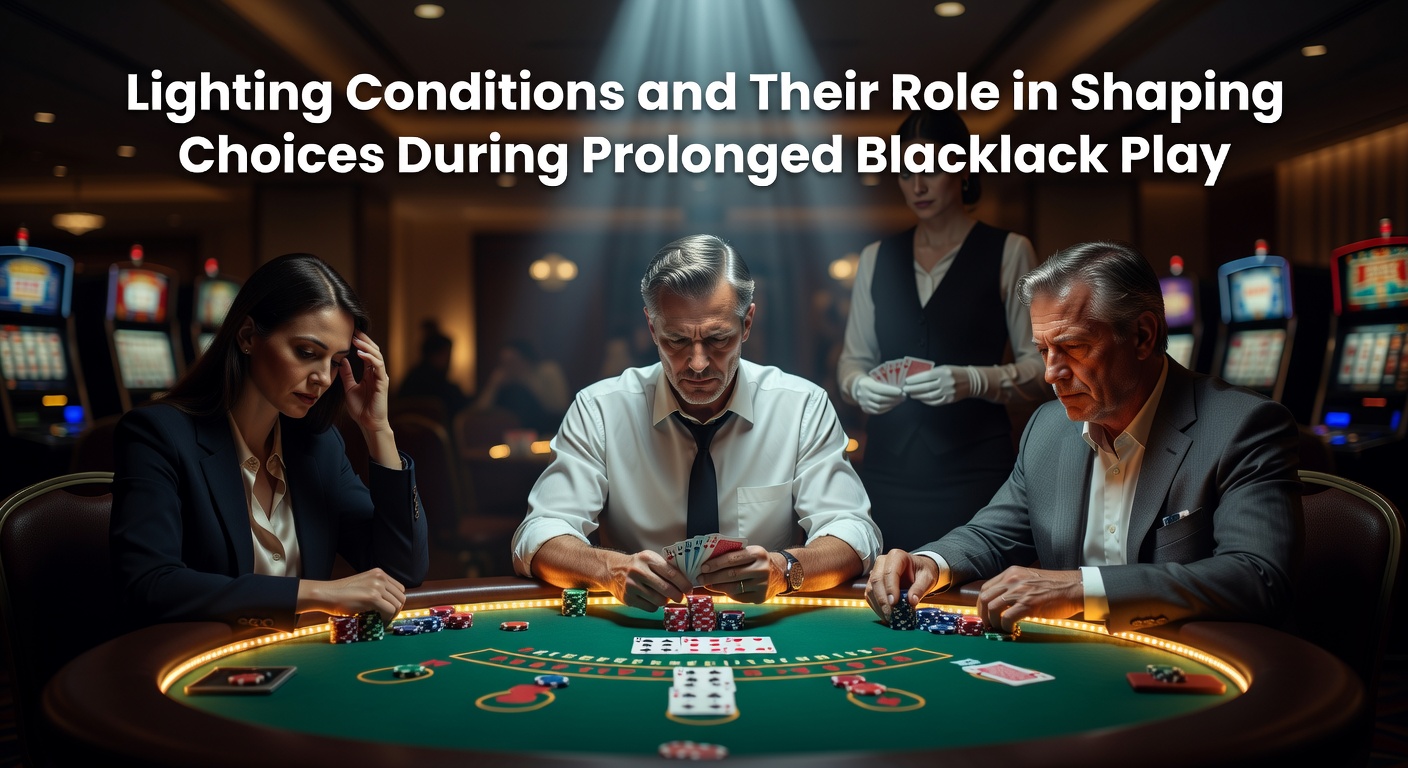
Lighting conditions in gaming environments play a measurable role in how players process information and adjust their decisions during long blackjack sessions, according to multiple studies on visual perception and cognitive performance. Research from academic institutions shows that different light levels influence alertness, attention span, and risk assessment, which become particularly relevant when sessions extend beyond two hours. Data collected from casino operations across North America and Europe indicates that facilities often maintain specific lux ranges, typically between 50 and 150 lux at table surfaces, to balance visibility with atmosphere.
Core Principles of Casino Illumination Design
Design teams calibrate lighting to reduce eye strain while maintaining focus, yet these choices create subtle shifts in player behavior over time. Warm, lower-intensity lighting tends to promote relaxation, which can slow reaction times to card patterns and dealer cues. In contrast, cooler and brighter setups heighten visual acuity, allowing faster recognition of card values but potentially increasing mental fatigue when sustained for extended periods. Observers note that many large resorts adjust these levels dynamically throughout the day, with evening hours often featuring dimmer zones around high-limit tables to encourage longer stays.
Effects on Cognitive Processing and Risk Evaluation
Studies in environmental psychology reveal that reduced lighting can lower cortisol levels, leading to calmer but sometimes less precise decision-making during sequential betting rounds. Players under dim conditions demonstrate slower shifts away from initial strategies when faced with unfavorable card distributions. Brighter environments, meanwhile, correlate with higher arousal states that support quicker calculations yet may accelerate the onset of decision fatigue once sessions stretch past three hours. A 2024 report from the Australian Institute of Family Studies documented similar patterns in electronic gaming settings, where participants exposed to varying light intensities showed measurable differences in bet sizing consistency.
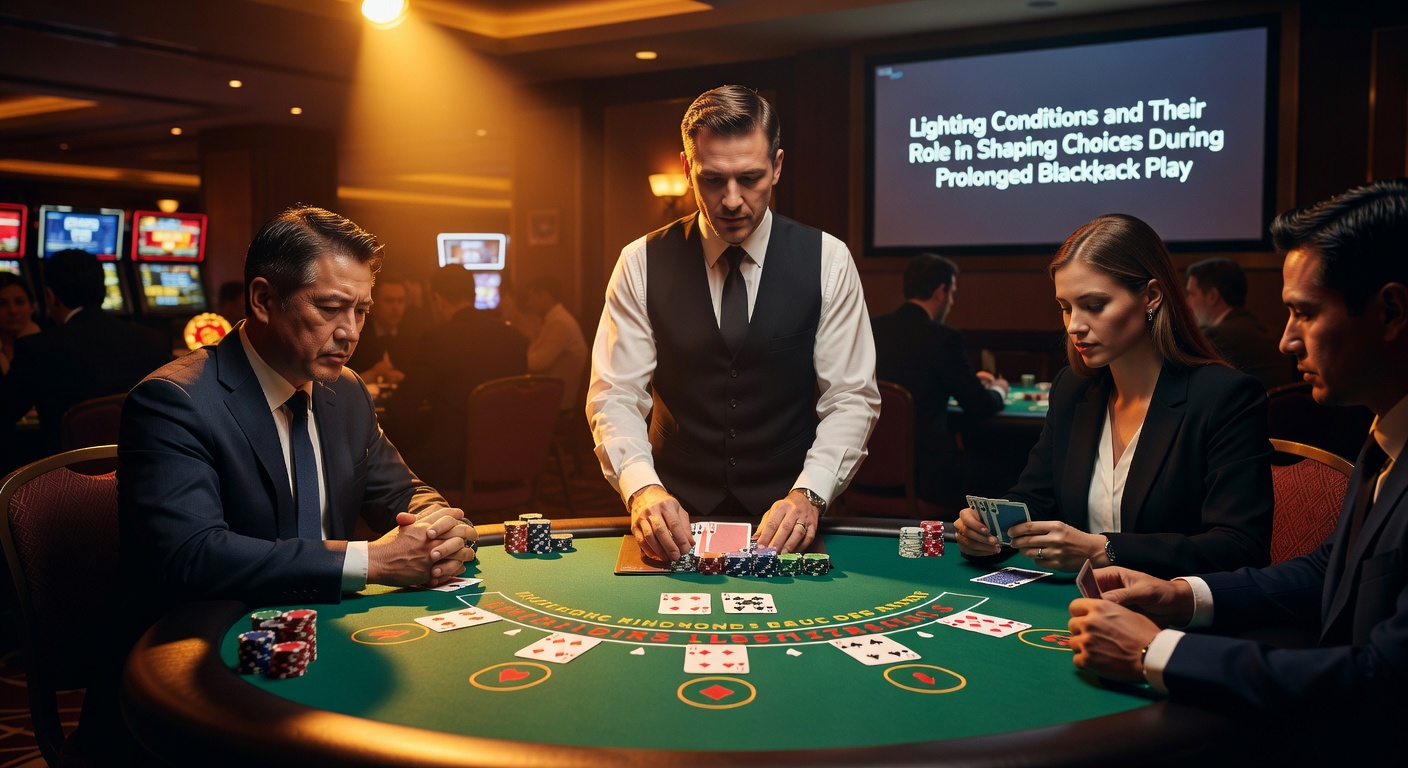
Further analysis from European research centers highlights how light color temperature affects peripheral vision and the ability to track multiple table elements simultaneously. Cool white light above 4000K improves edge detection for card suits and values, while warmer tones around 2700K reduce contrast fatigue during repetitive hand evaluations. These factors accumulate gradually, influencing whether a player maintains strict adherence to basic strategy or begins to deviate toward more intuitive choices as the session lengthens.
Observed Patterns in Extended Play Sessions
Long-duration blackjack participants frequently encounter compounding effects where initial lighting advantages give way to diminished focus. Data from Nevada gaming operations between 2023 and 2025 shows that tables with stable mid-range lighting report steadier average bet volumes, whereas zones with frequent light transitions see greater variance in player choices. Those who study casino ergonomics point out that players often unconsciously adjust posture and eye movement to compensate for suboptimal lighting, which adds an extra layer of cognitive load during marathon sessions.
Additional findings from Canadian provincial gaming reports indicate that strategic adjustments occur more readily under consistent lighting conditions. Participants maintained closer alignment with optimal play charts when illumination remained steady, while fluctuating light levels corresponded with increased reliance on recent outcomes rather than probabilistic calculations. This pattern becomes especially pronounced after four hours of continuous play, when visual adaptation and mental stamina interact.
Practical Considerations for Players and Venues
Venues increasingly incorporate layered lighting systems that combine overhead fixtures with localized table lamps, allowing operators to fine-tune conditions without disrupting overall ambiance. Players who remain aware of these environmental variables can monitor their own response patterns, such as changes in betting pace or hesitation during key decisions. Industry associations recommend periodic breaks that include exposure to different light environments, which helps reset visual processing and supports clearer evaluation of ongoing hands.
Equipment manufacturers have responded by developing tables with adjustable LED integration, enabling real-time modifications based on occupancy and time of day. These systems, tested in pilot programs across several jurisdictions, demonstrate potential for maintaining player engagement without accelerating fatigue. Research indicates that such targeted adjustments can extend the period during which decision quality remains stable, particularly for those participating in multi-hour sessions.
Conclusion
Lighting conditions continue to represent a significant environmental factor in how choices evolve during prolonged blackjack play. Evidence from multiple regions demonstrates clear connections between illumination characteristics and cognitive performance metrics that directly influence strategic consistency. As gaming facilities refine their design approaches adn researchers gather additional longitudinal data, the relationship between light exposure and decision patterns offers ongoing opportunities for both operational improvements and player awareness.