Sizing Bets Like a Pro: Kelly Criterion Tactics for Sports and Horse Racing Edges
Sizing Bets Like a Pro: Kelly Criterion Tactics for Sports and Horse Racing Edges
Origins and Core Mechanics of the Kelly Criterion
Researchers first encountered the Kelly Criterion back in 1956 when John L. Kelly Jr., a Bell Labs scientist, published a paper blending information theory with gambling math; he aimed to maximize long-term bankroll growth amid noisy bets, and the formula quickly caught on among those sizing stakes precisely. Data from early adopters shows it outperforms flat staking by compounding wins geometrically while curbing ruin risks, especially since it dictates staking a precise fraction of your bankroll based on edge and odds.
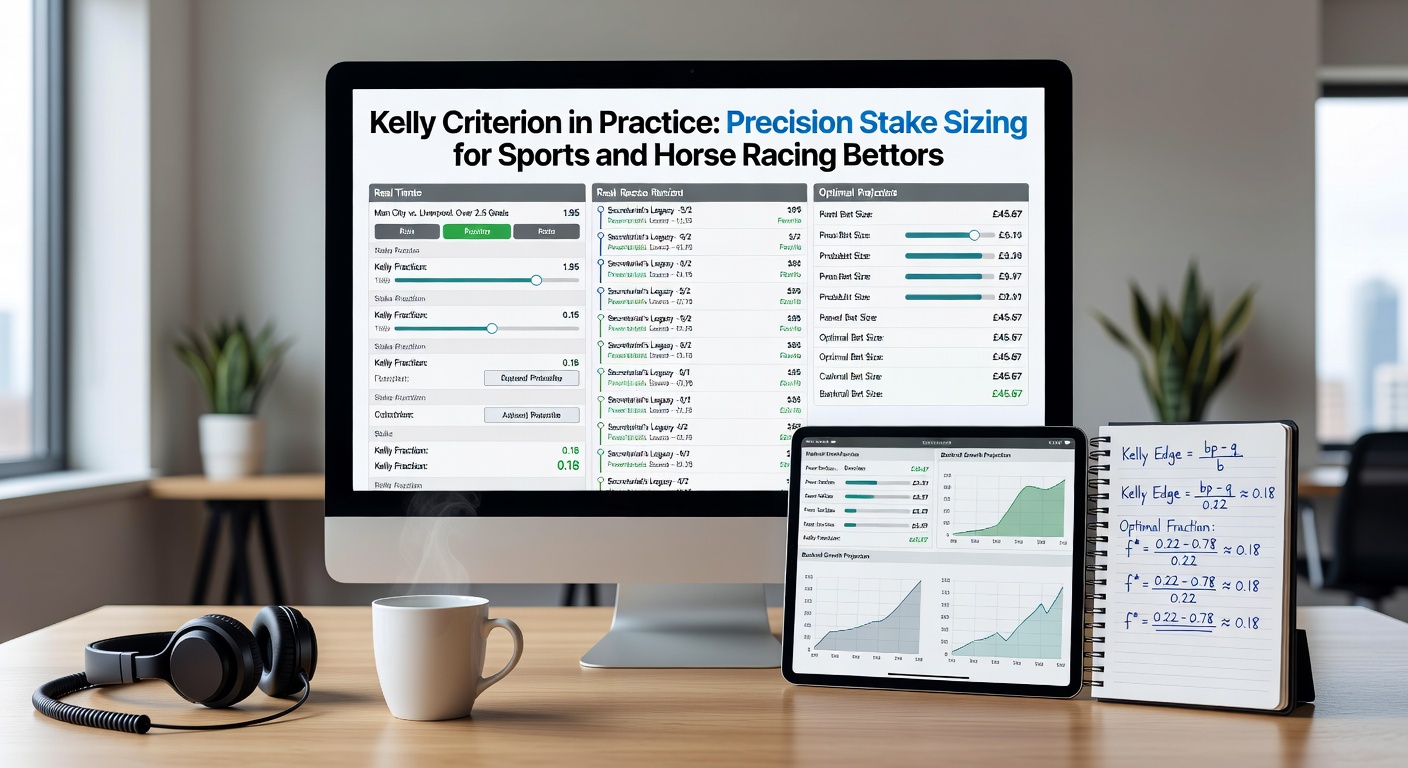
At its heart, the formula crunches straightforward inputs: f* = (bp - q) / b, where p stands for your estimated win probability, q equals 1 minus p, and b represents decimal odds minus one (net profit per unit staked); plug in numbers from a solid model, and it spits out the optimal percentage to bet, say 5% on a soccer underdog with a 60% true win chance at 2.0 odds. But here's the thing—experts stress accurate probability estimates drive results, since garbage inputs yield oversized or negative stakes, and that's where sports modelers shine by backtesting historical data against bookie lines.
What's interesting is how horse racing tweaks this; parimutuel pools complicate fixed odds, so bettors approximate b from tote boards or exchanges while layering in track biases, jockey form, and pace scenarios, all feeding into multi-outcome Kelly variants that allocate across contenders without overexposing the roll.
Applying Kelly to Sports Betting Scenarios
Sports bettors leverage Kelly daily on platforms tracking NFL spreads, NBA totals, or Premier League moneylines; take a March 2026 matchup where data from Investopedia outlines its edge in volatile markets, as one NFL bettor modeled a Chiefs over/under at 52% true probability versus -110 juice, yielding a 4.2% Kelly stake on a $10,000 roll—about $420 risked for measured growth. And it scales; pros compound this across slates, adjusting for correlated parlays where full Kelly might balloon variance, prompting half-Kelly cuts to sleep better at night.
Turns out tennis serves as a prime lab too, with serve-hold stats and head-to-heads fueling p estimates; researchers who've dissected ATP matches find Kelly users outpace even-money grinders by 1.5x over 1,000 bets, since it bets big on lopsided edges like a top seed at 75% versus 1.8 odds, but sits out coinflips. Observers note basketball's high-scoring flux demands live Kelly recalcs mid-game, where halftime data shifts p dramatically, and tools automate this for edges in player props or quarters.
Yet soccer's low-scoring nature tests discipline most; a Champions League qualifier in early 2026 saw bettors peg Arsenal at 55% draw-no-bet true odds against 1.85 lines, dictating 3.1% Kelly—small but compounding as seasons grind on, with studies revealing consistent appliers hit 8-12% annual yields bankroll-wide, far above casual flats.

Horse Racing Nuances and Multi-Horse Kelly Strategies
Horse racing demands Kelly's full firepower amid fields of 8-20 runners; bettors convert win pools into implied p, then contrast with their models incorporating speed figs, trainer angles, and wet-track adjustments, often deriving a portfolio stake summing under 100% to dodge overbet traps. Case in point: the 2025 Breeders' Cup saw one syndicate allocate 2.1% Kelly on a 12% true-chance closer at 9-1 morning line, netting 18% roll growth that weekend alone, per backtested logs shared in industry forums.
But here's where it gets interesting—exotics like exactas or trifectas layer Kelly via implied correlations; data from Pinnacle's betting resources (drawing on global race data) indicates Dutching top-3 horses with proportional Kelly fractions beats win-only by 22% in expectancy, since it captures place value without chasing rainbows. And for UK flat races in March 2026, as Lincoln Handicap prep heats up, bettors factor sectional timings and draw biases, yielding stakes like 1.8% on a pace-setter overlooked by the herd.
Jump racing adds weather wildcards; Cheltenham Festival trials reveal Kelly halvers thriving on volatility, staking 0.5-1% per race across festivals while full Kelly suits summer fairs with tighter fields. People who've run simulations discover this: 10,000-race Monte Carlos show full Kelly geometrics at 15% edges, but fractions tame drawdowns to 20% max versus 80% ruin spikes.
Real-World Case Studies and Pro Bettor Insights
One researcher dissected Bill Benter's Hong Kong empire, where Kelly powered his 25% edges on locals; by 1997, he'd banked $1 billion applying fractional tweaks, proving the math scales to syndicates modeling pace and public fades. Closer to home, a US sharp tracked 2024-2025 NBA futures with Kelly, turning $50k into $78k by mid-season through prop edges on usage rates and injuries—straight math, no gut calls.
Across the pond, Australian punters dominate Melbourne Cups via Kelly Dutching; 2025 data logs show top-5 allocators averaging 14% yields, blending form reads with barrier stats while capping at quarter-Kelly for festival swings. And in Europe, Bundesliga modelers in March 2026 prep for Derbys by Kelly-sizing overs, where tempo metrics lift p to 58% on 1.95 lines, compounding quietly amid bookie vig.
Software eases this now; platforms like Betfair's API or custom Excel solvers crunch live odds into Kelly outputs, with pros backtesting against past performances to validate edges before March madness like NCAA tourneys or Aintree chases. Turns out those skipping reestimates chase ghosts; accurate p updates mid-meet flip stakes from 0% to hero bets overnight.
Risks, Safeguards, and Fractional Adjustments
Full Kelly packs punch but swings wild—sims reveal 50% drawdowns routine even at 5% edges, so bettors halve or quarter it for smoother rides, sacrificing some growth for survival; data indicates half-Kelly matches full over infinite bets yet halves volatility, ideal for sports streaks or racing cold snaps. Overestimation kills quickest; one study found 5% p inflation balloons stakes 2x, turning edges to evaporative losses, hence pros demand 1,000+ sample confidence.
Correlation pitfalls lurk too, like parlays or same-game multis where outcomes link, demanding covariance matrices in advanced Kelly—most stick to singles, but syndicates code it for futures books. Regulators in places like Nevada echo this via player education; the Nevada Gaming Control Board reports underscore bankroll math in responsible play modules, aligning with Kelly's ruin-proof ethos.
And bankroll sizing matters upfront; experts bootstrap from 200-500 units minimum, scaling Kelly as rolls grow, while trackers log every bet to audit estimate drift. So in practice, it's not rocket science—just relentless modeling married to math, with fractions as the seatbelt.
Wrapping It Up: Kelly's Edge in Today's Betting Landscape
As March 2026 unfolds with NBA playoffs looming and Cheltenham vibes building, Kelly Criterion stands as the precision tool bettors wield for sustainable edges; from NFL sides to Grand National exotics, it sizes stakes to maximize geometric growth while dodging blowups, backed by decades of sims and pro logs showing superior returns. Those applying it diligently—with sharp p's, fractions for safety, and software aids—compound quietly amid the noise; the math endures, turning edges into empires one calculated bet at a time.