Spreading Exposure: How Multi-Table Poker Participants Allocate Risk Across Prolonged Sessions
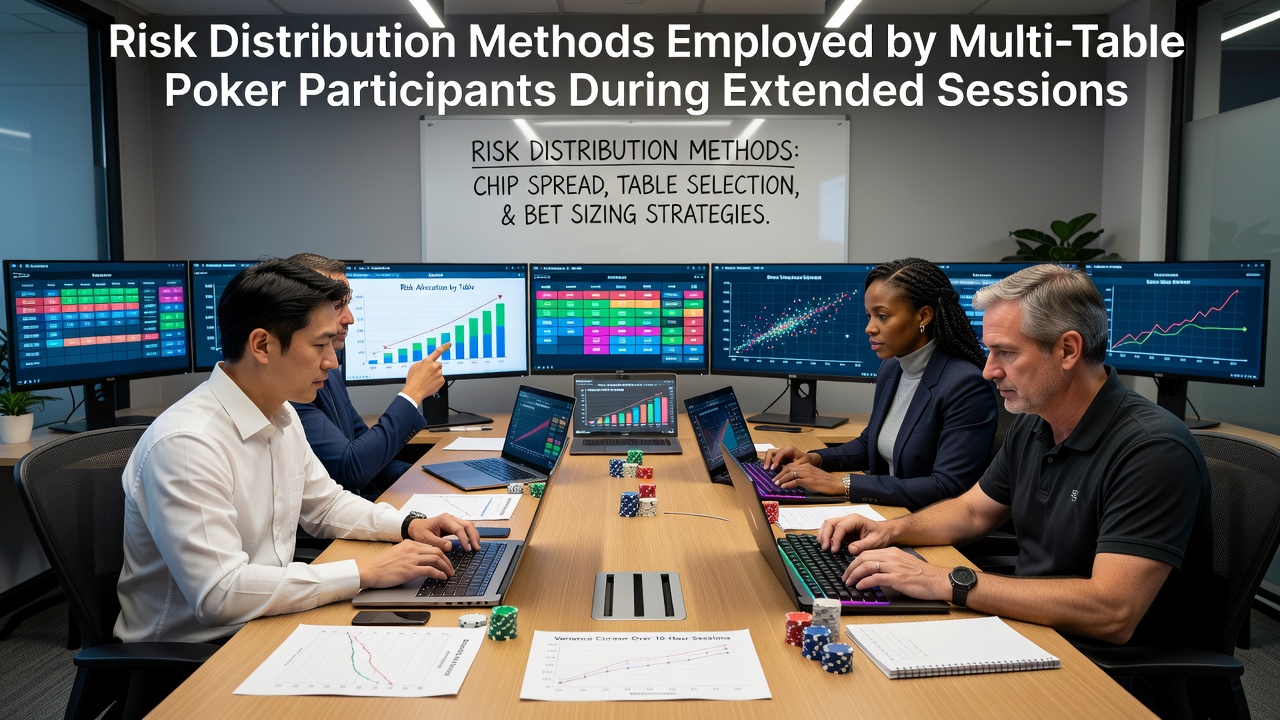
Multi-table poker requires participants to manage several games simultaneously while maintaining consistent decision quality over hours or even days of continuous play, and risk distribution methods form the core framework that allows players to sustain participation without rapid capital depletion.
Core Principles of Risk Allocation in Multi-Tabling
Participants begin by establishing strict bankroll parameters that determine how many tables can operate at once without exceeding predetermined loss thresholds, and these parameters often incorporate tiered limits that adjust automatically based on session length and performance metrics. Research from the University of Nevada's gaming studies program shows that players who cap individual table exposure at 1-2% of total bankroll maintain longer session viability compared to those who apply uniform sizing across all tables. Data collected through 2025 indicates that extended sessions lasting beyond four hours see a measurable uptick in variance when table counts exceed eight without corresponding reductions in stake levels.
Table Selection and Stake Diversification Techniques
Seasoned multi-tablers distribute risk by mixing game types and stake levels rather than repeating identical formats, which reduces the impact of any single table's outcome on overall results. One common approach involves pairing high-variance tournament entries with lower-stakes cash games that provide steadier returns, while another method rotates between different poker variants to prevent pattern recognition by opponents. Observers note that players frequently adjust their table mix mid-session when early results indicate higher-than-expected swings, and this flexibility helps preserve capital for later stages of extended play periods.
Real-Time Monitoring and Adjustment Protocols
Software tools track per-table win rates and standard deviation in real time, allowing participants to close underperforming tables before losses compound across the session. These systems often include alerts that trigger when cumulative risk across all active tables approaches a set percentage of the session bankroll, and players respond by either reducing stakes or dropping tables entirely. According to figures from the Canadian Partnership for Responsible Gambling, structured monitoring correlates with lower rates of unplanned session termination during periods of extended play. What's interesting is how these protocols evolve throughout 2026, with new data releases expected around major online poker events scheduled for June highlighting shifts in player behavior following software updates.

Session Structuring and Recovery Mechanisms
Extended sessions benefit from built-in checkpoints where participants reassess overall exposure and decide whether to continue, reduce activity, or exit entirely. These checkpoints typically occur at fixed time intervals or after reaching specific win or loss markers, and they incorporate rules for profit distribution that lock away portions of gains to prevent them from funding additional risk. Studies indicate that players who implement mandatory breaks every ninety minutes demonstrate more stable decision-making across multi-table environments, particularly when those breaks include review of hand histories from all active tables.
Psychological and Financial Safeguards
Many participants separate their poker bankroll into distinct segments designated for different session lengths, which prevents short-term results from influencing decisions about longer commitments. This segmentation often includes dedicated recovery funds that activate only after predefined drawdown levels are reached, and it works alongside self-imposed table caps that limit the maximum number of simultaneous games regardless of perceived edge. Evidence from industry reports compiled by the American Gaming Association reveals that structured segmentation practices appear more frequently among players who sustain multi-table participation over multiple years.
Conclusion
Risk distribution in multi-table poker during extended sessions relies on layered approaches that combine bankroll segmentation, real-time monitoring, stake diversification, and scheduled reassessment points. These methods allow participants to maintain operational capacity across numerous tables while controlling overall exposure, and ongoing data collection continues to refine how such techniques adapt to changing game environments and player volumes.