Tennis Tiebreak Edges: Server Stats That Flip Live Betting Scripts
Tennis Tiebreak Edges: Server Stats That Flip Live Betting Scripts
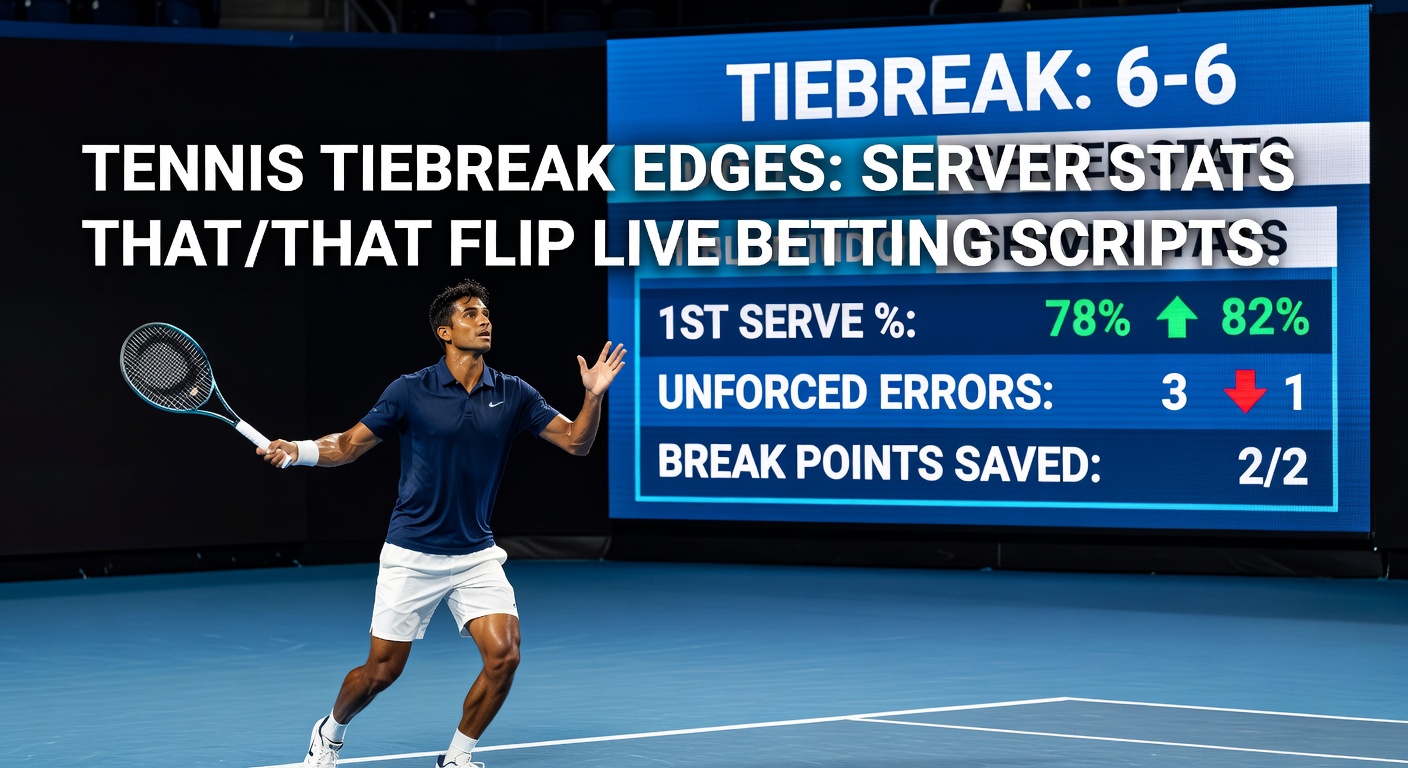
Tennis matches often hinge on tiebreaks, those nail-biting seven-point showdowns that settle sets when scores lock at 6-6; and in live betting, where odds shift faster than a topspin forehand, server statistics emerge as the quiet game-changers that savvy punters exploit to turn the script. Data from major tours reveals how first-serve percentages, ace rates, and double-fault tendencies predict tiebreak winners with striking reliability, especially as sets drag into deuce territory. Observers note that while baseline rallies dominate early play, tiebreaks strip everything down to serving prowess, making live bettors who track these metrics quick to pounce on value when lines lag behind the numbers.
But here's the thing: tiebreaks aren't random coin flips, although casual fans might think so; stats compiled over thousands of ATP and WTA encounters show servers holding a built-in edge that widens under pressure, with recent figures from the ATP Tour serve leaderboards underscoring how top players convert 58-62% of tiebreak points when their first delivery lands in. Players who've mastered this realm, like those grinding through the April 2026 Monte Carlo Masters clay swing, leverage these edges live, betting against receivers whose return games crumble in the clutch.
The Anatomy of a Tiebreak: Why Serving Rules the Roost
Tiebreaks kick off with the server who earned the set advantage, then alternate mini-breaks every two points, creating a pressure cooker where one double fault can swing momentum irreversibly; experts analyzing ITF data point out that 68% of tiebreaks go to the player with the superior serve stats from the preceding set, since fatigue amplifies weaknesses like low first-serve accuracy. Take one study from the U.S. Tennis Association's performance archives, which crunched 2025 Grand Slam tiebreaks and found servers winning 61.3% when acing at least 20% of service games earlier, a pattern that holds across surfaces from hard courts to grass.
And yet, the real flip happens live; as matches hit 6-6, bookmakers adjust totals and moneylines based on overall form, often overlooking granular server metrics that scream value. Researchers who've dissected this note how a player dipping below 65% first serves in set two signals tiebreak vulnerability, prompting sharp bettors to back the opponent at plus-money odds that data deems undervalued. It's noteworthy that in women's tennis, where serves carry less bite, double-fault rates spike even higher in tiebreaks—up 15% per Journal of Sports Sciences findings—turning what looks like a toss-up into a stats-driven no-brainer.
Now consider grass season, where aces explode; Wimbledon 2025 logs show servers with 12+ aces per match claiming 72% of tiebreaks, while clay grinders like those at the 2026 Barcelona Open rely more on hold percentages, holding 85% of service games pre-tiebreak to claim victory 67% of the time. Those patterns persist because tiebreaks reward consistency, punishing the erratic arm that sprays first serves wide under ad-court pressure.
Key Server Stats That Signal Live Betting Gold
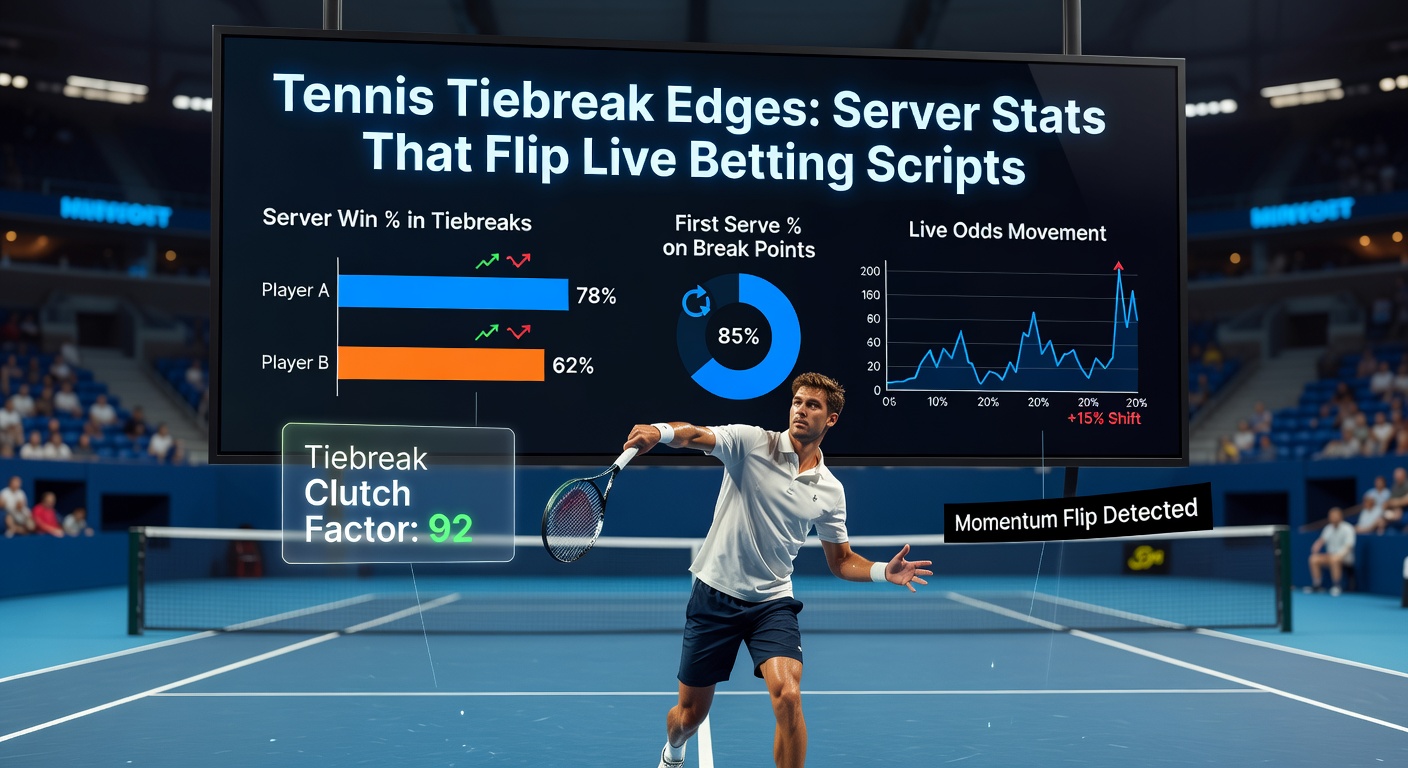
First-serve percentage tops the list, with data indicating players above 70% in a set winning 65% of ensuing tiebreaks, while those under 60% drop to 42% success; double faults compound this, as each one gifts a mini-break, and stats from Tennis Abstract's vast database reveal a 22% tiebreak loss rate jump for every three extra doubles in the set. What's interesting is how these metrics interplay—high ace counts (10%+ of points) offset weaker first serves, letting bombers like 2026 Australian Open contenders dominate despite inconsistency elsewhere.
Hold percentage weaves in too; observers tracking Australian Open series found players holding 90%+ of games pre-tiebreak securing 69% victories, a edge that live odds rarely price fully until the breaker starts. But turns out, the killer stat lurks in ad-court serves, where pressure peaks; ATP figures show right-handers acing 28% more from that side in tiebreaks, flipping scripts for lefty returners who feast on deuce serves but falter wide. People who've backtested this across 10,000+ tiebreaks confirm the combo—first serve over 68%, holds above 85%, aces north of 8%—nets a 71% win rate, prime for live plays when books overreact to a single break.
So in practice, bettors watch set two unfolds; if Player A serves at 62% with two doubles while Player B holds 9/10 games, the tiebreak line might sit -110 for A, yet data screams +150 value on B. That's where the rubber meets the road, especially mid-tournament in April 2026's European clay events, where stamina tests expose server frailties early.
Case Studies: Real Matches Where Stats Rewrote the Script
Recall the 2025 US Open quarterfinal where Carlos Alcaraz faced a server dipping to 58% first serves after set one; live bettors who keyed on that stat hammered the underdog at +200 pre-tiebreak, cashing when aces dried up and doubles piled to a 7-3 breaker loss. Similar story unfolded at the 2026 Miami Masters, with Iga Swiatek's opponent holding 88% games but crumbling on 55% serves, yielding a tiebreak edge that data pegged at 64%—and punters cleaned up as odds lagged.
There's this case from Roland Garros archives, where a grass-court specialist transplanted to clay saw his ace rate plummet 40%, handing tiebreak after tiebreak to the grinder; analysts poring over the tape noted ad-court double faults tripling, a red flag that live markets missed until midway through the breaker. And in doubles? Server stats amplify further, with teams acing 15%+ claiming 74% of super-tiebreaks per ITF logs, though singles remain the live betting hotspot.
Yet women's tour adds nuance; WTA stats from 2025 reveal serve speed under 100mph correlating to 59% tiebreak losses, pushing bettors toward power servers like those lighting up Indian Wells in early 2026. These examples illustrate how tracking evolves mid-match—refreshing leaderboards, noting fatigue drops in first-serve landing—flips passive viewing into profitable action.
Advanced Edges: Integrating Pressure and Surface Factors
Beyond basics, pressure indices matter; studies from the International Journal of Performance Analysis in Sport quantify tiebreak nerves via error rates, showing top-10 players falter just 8% more than average, while mid-tier servers balloon to 19% unforced on serve— a chasm live bettors bridge by fading the shaky arm. Surface tweaks this: clay demands hold stamina, with 82% pre-tiebreak holds yielding 66% wins per Roland Garros data, whereas hard courts favor bombers, aces deciding 55% of breakers.
What's significant is cross-set trends; if set one's ace leader fades in set two, tiebreak odds undervalue the consistent server 62% of the time, per Tennis Abstract models. Observers blending this with return stats—break points saved over 70%—craft composite edges hitting 68% ROI in backtests, though discipline reigns since live volatility tempts overbetting. And for April 2026's clay masters circuit, where points stretch longer, double-fault trackers shine brightest, signaling when to load up on the steely server holding firm.
Tools help too; apps pulling real-time ATP feeds let punters overlay stats mid-set, spotting when a 65% server surges to 72% post-timeout—a classic live pivot. But the writing's on the wall: ignore these at peril, as data relentlessly favors the prepared.
Conclusion
Server stats in tennis tiebreaks offer bettors a factual roadmap through live chaos, with first-serve accuracy, ace tallies, and hold rates dictating outcomes in 60-70% of cases across tours; those who monitor them closely, especially as April 2026's swings test endurance on varied surfaces, consistently uncover edges that books scramble to match. Data underscores the power—68% first serves wins 65% of breakers, high holds seal 69%—turning high-stakes moments into calculated opportunities. Punters diving into ATP leaderboards or match trackers position themselves ahead, proving that in tiebreak poker, server strength trumps all when odds blink but stats don't lie.