Unlocking Guaranteed Profits: Matched Betting and the Power of Bookmaker Promotions
Unlocking Guaranteed Profits: Matched Betting and the Power of Bookmaker Promotions
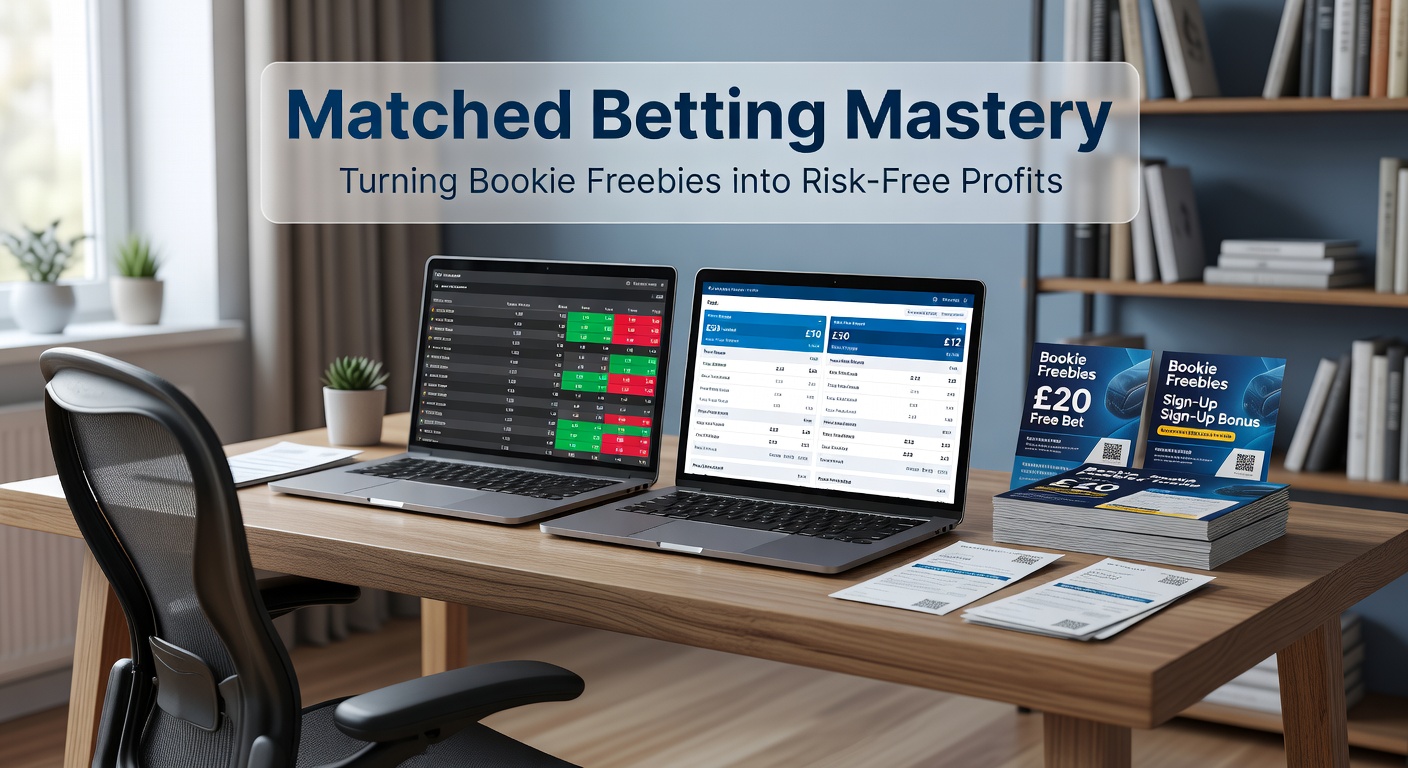
Matched betting has emerged as a strategy where bettors exploit bookmaker free bet offers to generate profits without exposure to financial risk, relying on mathematical precision rather than luck; those who master it often report consistent returns, turning promotional bonuses into tangible gains while the underlying events unfold irrelevant to the outcome.
What Exactly Is Matched Betting?
At its core, matched betting involves placing a qualifying bet with a bookmaker to unlock a free bet, then offsetting that position by laying the same outcome on a betting exchange; this process, known as matching, covers all possible results, ensuring the initial stake returns regardless of whether the event favors the back or lay side, and positions the free bet for pure profit extraction.
Experts trace its popularity back to the explosion of online bookmakers in the early 2000s, when free bet promotions became standard; data from industry trackers shows users extracting upwards of £500-£1,000 monthly from sign-up offers alone, scaling up as loyalty bonuses enter the mix, all while maintaining a near-zero risk profile because exchanges like Betfair facilitate the lay bets at close odds.
What's interesting is how this method sidesteps traditional gambling pitfalls; unlike straight wagers where variance rules, matched betting leverages qualifying losses—small, controlled amounts like £5-£10—that free bets more than recoup, creating a net positive loop.
The Mechanics: Back Bets Meet Lay Bets
Consider a typical scenario: a bookmaker offers a £30 free bet after a £10 qualifying wager at even money; one places the back bet on Team A to win at 2.0 odds, then heads to the exchange to lay Team A at 2.05 odds, adjusting stake sizes via calculators to balance the book, resulting in a qualifying loss of around £0.50 but qualifying for the free bet.
With the free bet in hand—non-withdrawable cash bonus activated—one repeats the process, but now extracts 70-80% of its value as profit; lay the free bet outcome, and since the bookmaker stake is "free," only the exchange commission bites, leaving £20-£24 clear profit per offer, depending on lay odds availability.
Tools drive efficiency here; software like odds matchers scan hundreds of bookies and events in real-time, highlighting close matches above 98% quality, while advanced calculators factor in commission rates, enhanced odds, and even casino offers, streamlining what once took hours into minutes.
And here's where it gets precise: research from the Australian Gambling Research Centre indicates that proper stake matching eliminates over 99% of risk, with variance limited to rounding errors or gubbing—bookies limiting accounts—which savvy users mitigate through disciplined volume across multiple sites.
Step-by-Step: Executing Your First Matched Bet
Start by signing up with a bookmaker flashing a welcome offer, say Bet365's bet £10 get £30; deposit minimally, place the qualifying back bet on a high-liquidity football match via the odds matcher, note the lay odds on the exchange, input into a free calculator, and place the lay to qualify.
Once the free bet lands—often within 24-48 hours—select a suitable lay opportunity, extract the profit, withdraw funds; repeat across 50+ bookies, tracking progress in spreadsheets or dedicated trackers that log offers, profits, and account health.
People who've scaled this often diversify into reload offers, enhanced accumulators, and even bingo or casino free plays, where similar back-lay principles apply; one case study from a community forum revealed a user netting £8,247 in six months from 142 offers, averaging £1,374 monthly with under two hours daily input.
But the ball's in the exchange's court for liquidity; March 2026 sees Premier League action peaking, flooding markets with volume, making Premier League clashes ideal for tight matches under 1% qual loss.
Tools and Resources That Power Success
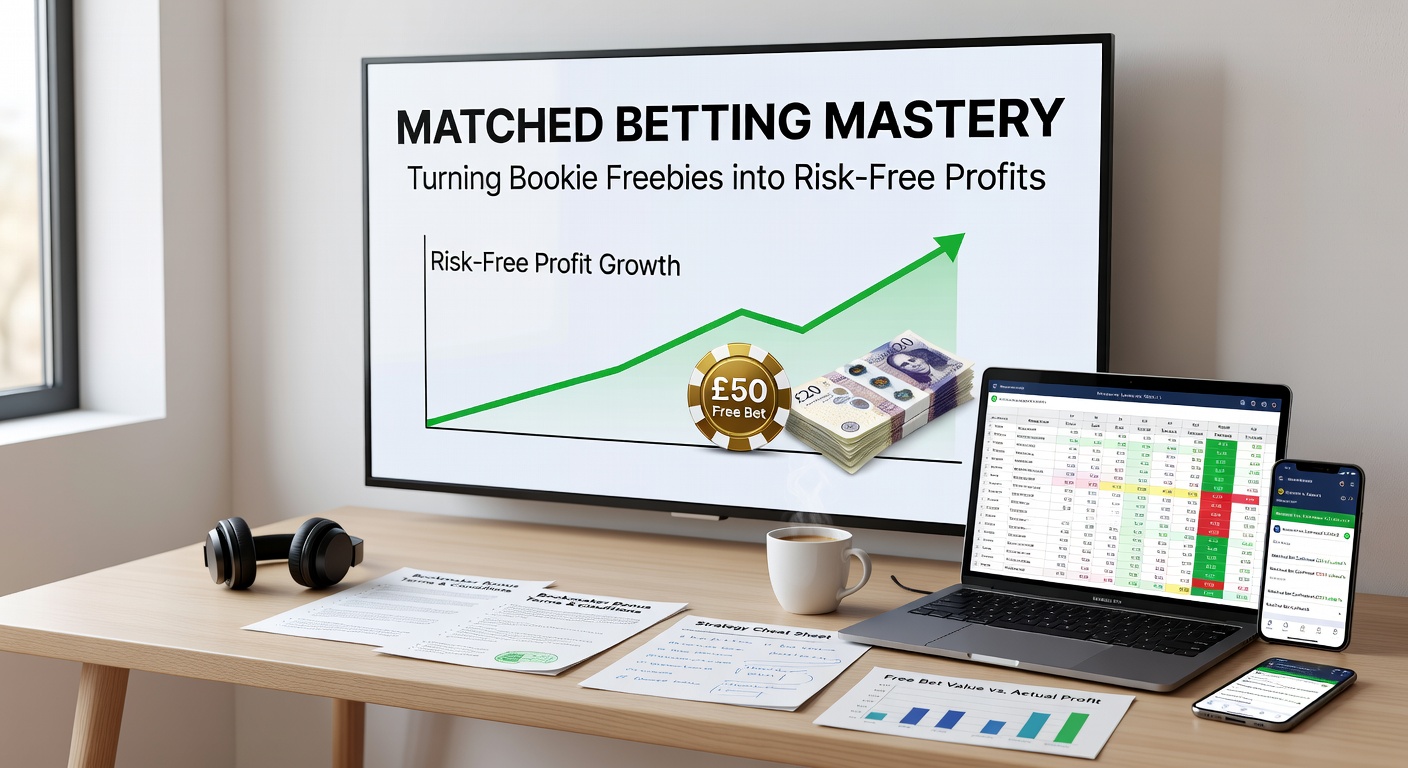
Free trials abound for premium services, but even basic spreadsheets suffice for starters; premium suites offer automated alerts, offer calendars, and gubbing radars, with data showing subscribers clearing all major UK offers within weeks, then mopping up internationals.
Exchanges charge 2-5% commission on lay winnings, yet this barely dents profits since free bet extractions hover at 75% retention; those using multiple exchanges, like Smarkets at 2%, optimize further, compounding returns over time.
Turns out, communities play a huge role; forums share live offer updates, warn of promo tweaks—like March 2026's shift by some bookies to "bet X get Y in shop bets"—and dissect edge cases, helping users adapt swiftly.
Navigating Challenges: Gubbing and Beyond
Bookmakers spot heavy bonus hunters through patterns like low-stake qualifiers and exchange-heavy activity, leading to stake limits or offer exclusions; experts counter this by mixing straight bets (5-10% of activity), spacing qualifiers, using business names for multiple accounts where legal, and rotating lesser-known sites.
Regulatory landscapes vary globally; in regions like New Jersey, where sports betting thrives, the New Jersey Division of Gaming Enforcement oversees promotions ensuring fair terms, while users adapt matched strategies to local exchanges and bonuses, reporting similar risk-free yields.
Tax implications surface too—profits tax-free in places like the UK as gambling proceeds, but taxable elsewhere—prompting trackers to log meticulously; common slips include miscalculating lays, chasing poor matches over 5% qual loss, or withdrawing prematurely before maxing offers.
Yet observers note that disciplined practitioners sustain £500+ monthly indefinitely by recycling profits into float for high-volume low-odds bets, turning initial £200 bank into self-sustaining machines.
Real-World Results and Scaling Up
Take the story of one full-time matcher who, starting in 2024, cleared £15,000 by mid-2025 through 300+ offers, then pivoted to advanced strategies like 2up offers and acca boosts; data from service benchmarks aligns, with top users hitting £1,500 monthly peaks during promo-heavy periods like Euro 2024 qualifiers.
Now, in March 2026, with World Cup qualifiers ramping up, bookies flood markets with "money back if team scores" deals, perfect for extractions yielding 60-70% returns; families even pool efforts, assigning members to specific bookies for faster rollouts.
It's noteworthy how this scales internationally; Australian users leverage local exchanges and Tabcorp promos, while Europeans tap Pinnacle lays, all under frameworks emphasizing player protection without stifling matched plays.
Conclusion
Matched betting stands as a proven method for converting bookmaker incentives into risk-free income, demanding initial learning but rewarding with mechanical profits; those who invest time in tools, track records diligently, and adapt to promo evolutions—like the March 2026 uptick in conditional free bets—unlock sustainable gains, proving that with the right matches, the house's gifts become the bettor's bankroll boosters.
Figures consistently show averages of £700-£1,200 monthly for part-timers, scaling higher for pros; the reality is straightforward: master the math, harness the freebies, and watch the profits stack without a single outcome mattering.