Volatility Clusters in Video Slots Driven by Seasonal Player Traffic Shifts
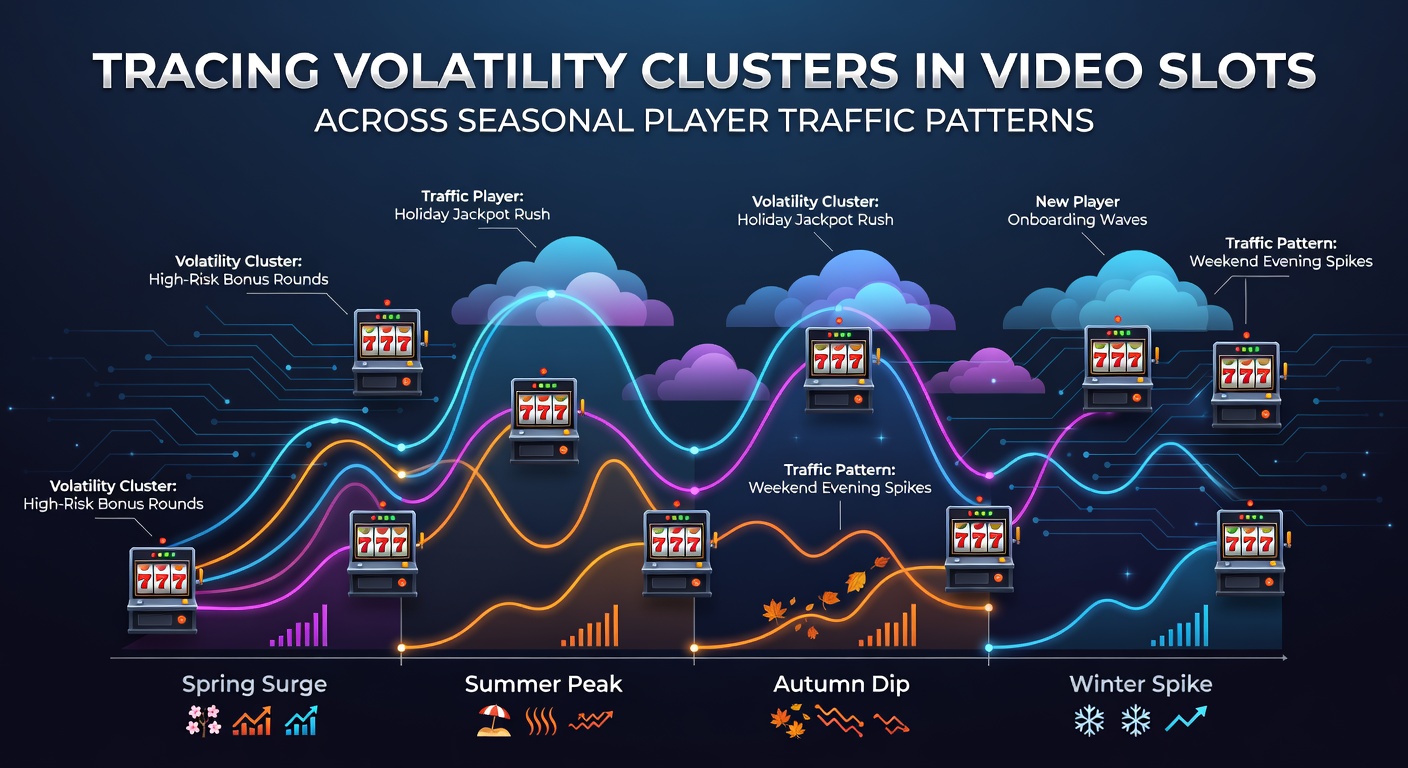
Video slot platforms display distinct volatility clusters that align with changes in seasonal player traffic, and researchers continue to map these connections through traffic logs and payout distributions. Data sets collected across multiple years reveal that high-traffic periods such as holiday weeks and summer months often coincide with tighter clusters of medium-volatility outcomes, whereas quieter shoulder seasons show wider spreads in win frequency and size. Analysts track these patterns by comparing hourly active-user counts against reel outcome frequencies, and the resulting correlations help operators adjust game configurations without altering core math models.
Defining Volatility Clusters in Video Slot Environments
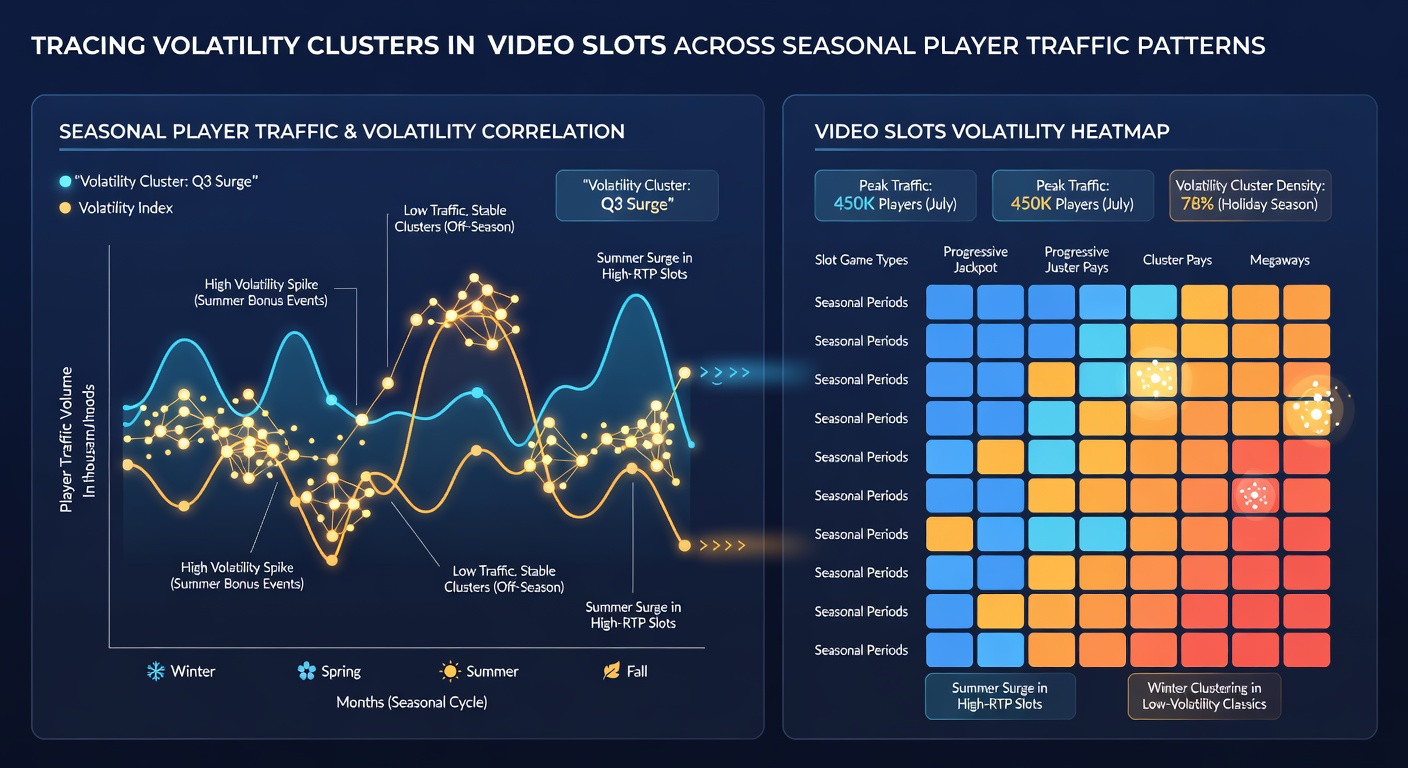
Volatility clusters represent groupings of game sessions where win rates and payout magnitudes fall within predictable ranges for extended intervals, and these groupings emerge when player volume shifts alter the distribution of bets placed per spin. Operators record session data that includes bet size, spin count, and return-to-player events, then apply clustering algorithms to identify periods when outcomes bunch together rather than scatter randomly. Studies from academic institutions such as the University of Nevada have examined how increased concurrent players during peak months compress variance in certain titles, producing clusters that favor steadier, mid-range returns over isolated large wins.
Traffic volume alone does not dictate volatility, yet the interaction between player density and game selection creates measurable effects on observed patterns. During high-traffic windows, popular titles attract larger sample sizes of spins within shorter timeframes, and statistical models indicate this concentration reduces the appearance of extreme outliers in short-term results. Conversely, low-traffic intervals allow individual sessions to exert greater influence on aggregate volatility readings, spreading outcomes across broader ranges.
Seasonal Traffic Patterns and Their Measurable Effects
Winter holiday periods generate the largest sustained spikes in player traffic across many jurisdictions, and records from December through early January consistently show elevated session counts that correlate with compressed volatility clusters in medium-volatility slots. Spring months produce steadier but lower overall traffic, and analysts note that volatility spreads widen as fewer concurrent players reduce the smoothing effect of large sample sizes. Summer travel seasons introduce regional variations, with some markets experiencing afternoon and evening peaks tied to vacation schedules while others see midday dips.
September and October often mark transitional traffic phases where clusters begin to tighten again ahead of year-end surges, and operators use these windows to test configuration changes that respond to emerging patterns. Data collected through May 2026 confirmed that spring shoulder months continued to display the widest volatility spreads across monitored titles, while early summer ramps produced the first measurable compression in cluster width. These seasonal markers appear consistently across multiple platforms and player demographics, allowing pattern recognition without reliance on individual game mechanics.
Data Collection Methods Used by Industry Analysts
Analysts gather traffic and outcome data through anonymized server logs that capture spin timestamps, bet amounts, and result values while preserving player privacy. Clustering techniques such as k-means and density-based spatial clustering then group sessions by volatility metrics calculated over rolling windows of several thousand spins. Cross-referencing these groups against calendar-based traffic categories reveals recurring alignments that hold across different game providers and regulatory markets.
Canadian provincial gaming authorities have published aggregate reports showing similar seasonal cluster behaviors in regulated online environments, and these findings align with observations drawn from European markets outside the United Kingdom. Researchers apply time-series decomposition to separate long-term trends from short-term seasonal effects, isolating the contribution of traffic volume to volatility compression. The resulting models allow operators to anticipate when clusters are likely to shift and to prepare game libraries accordingly.
Practical Applications for Game Configuration
Operators adjust promotional calendars and game availability in response to predicted cluster movements rather than attempting to alter underlying volatility settings. Titles that display pronounced cluster compression during high-traffic windows receive increased visibility during those periods, while games with wider natural spreads feature more prominently in quieter months. This approach relies on observed correlations rather than causation claims, and monitoring continues to refine placement strategies.
Real-time dashboards now incorporate traffic forecasts alongside volatility tracking, enabling rapid identification when clusters deviate from historical seasonal norms. Such systems proved useful in early 2026 when unexpected traffic surges during spring weeks produced earlier-than-anticipated compression in several monitored titles. Adjustments remained within existing game parameters, preserving regulatory compliance while responding to live data.
Conclusion
Seasonal player traffic patterns exert measurable influence on the formation and duration of volatility clusters in video slots, and ongoing analysis continues to map these relationships across expanding data sets. Operators and researchers rely on anonymized logs, clustering algorithms, and cross-market comparisons to identify recurring alignments without modifying core game mathematics. Reports from sources such as the Nevada Gaming Control Board and Canadian provincial summaries provide additional reference points for validating observed trends. As data collection methods advance, the precision of cluster predictions tied to traffic seasonality is expected to improve further.